
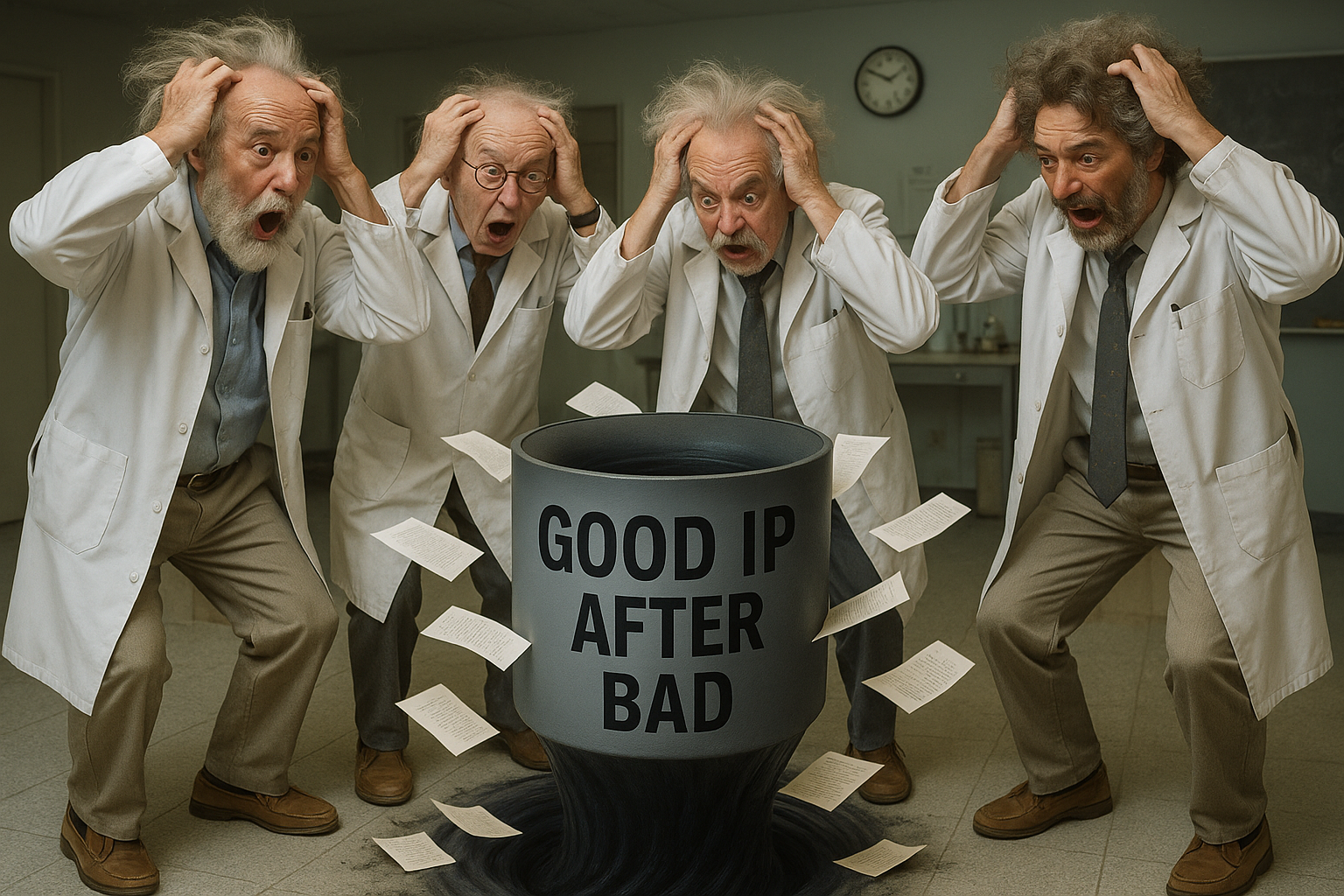
1. Brilliant Ideas, Missing Engine
New Zealand is full of clever people and hungry problems. Yet time after time, great ideas crawl out of the lab, blink in the sunlight and then quietly disappear. This piece looks under the hood of our science and innovation system and asks a simple question: why do we grow so much knowledge but so few world-class ventures, and what does that do to the people inside it?
2.From IP to Impact
If the first part of this story was diagnosis, spotting the “missing engine” in our commercialisation system, this second part is about design. What would it actually take for Aotearoa to turn more clever ideas into companies, jobs and solutions here at home? Other small countries have done it. The ingredients are not mysterious, stable capability, clear rules of the game, genuine clusters and a system built around people, not diagrams. The question is whether we are willing to build that machinery on purpose.

1. The Beautiful Lie of Simplicity — Why tidy policy so often leaves classrooms in chaos
“Simplification” promises clarity. In real classrooms it can shrink curiosity, sideline context, and turn rich judgement into checkbox fidelity. We can lift literacy and numeracy without hollowing out breadth: standardise the signal, not the script; invest in teacher judgement; measure more things, more lightly; and design for the margins first so the middle thrives. (Opinion: simplify bureaucracy, not learning.)
2. A School Is Not a Toaster - Why Systems Fight Back
Policy loves levers - new bells, tighter pacing, “fidelity” to programmes. But schools aren’t toasters; they’re ecosystems. Pull one lever and attendance, anxiety, whānau rhythms and teacher bandwidth all move too. Goodhart bites, brittleness grows and the harm shows late. The fix? Standardise the signal, not the script; invest in teacher judgement; measure more things, more lightly; and design for the margins first so the middle thrives.
3. Ghosts of Reforms Past
From England’s “rigour” era to America’s NCLB and Australia’s streamlining, tidy reforms often narrowed learning, inflated proxies and bruised equity. The pattern: short-term bumps, long-term remorse. The antidote? Standardise the signal, not the script; fund teacher judgement; measure more things, more lightly; and design for the margins first so the middle thrives.
4. The Algorithm Will See You Now
Learning walks now arrive with timers. “Fidelity” climbs; thinking flattens. You can standardise materials—not relationships; sequence—not judgement; checks—not curiosity. The fix: guardrails, not guard towers; invest in teacher judgement; measure more things, more lightly; design for the margins first.
5. Curiosity on a Leash
Coverage-first timetables sideline wonder: children read about photosynthesis while the beans on the sill go unobserved. “Coverage wins because it is countable. Curiosity loses because it is inconvenient.”
6. One Size Fits Precisely No One
Averages hide lives. “Equity by spreadsheet” rewards sameness, punishes difference, and mistakes neat for fair. The fix: design for the margins first (UDL), calibrate teacher judgement, disaggregate data beyond the mean, and give flexible pathways so diverse learners reach the same high bar—by different bridges.
7. Proof It Can Be Different
Finland and Scotland didn’t dump standards; they reframed them—clear concepts and capacities, local design, and teacher judgement treated as infrastructure, not vibes. The secret sauce: ring-fenced time, moderation networks, and mixed measures so breadth doesn’t get squeezed by one number. Translate, don’t transplant.
8. NZ Now?
Aotearoa is cutting a new deal. Choose well and we get clarity and curiosity; choose poorly and we get neat spreadsheets and thin learning. Protect: teacher judgement, local curriculum, te reo/tikanga, UDL, mixed evidence. Fix: ritual bureaucracy, measurement monoculture, pacing-fetish, underfunded time. Move aside: fidelity police, clipboard theatre, programme sales pitched as pedagogy.

Minding Our Manners - Why Courtesy in Business Is a Competitive Advantage
Manners aren’t old-fashioned — they’re underrated. While the world gets louder and cruder, businesses that treat people with honour and respect are quietly winning. They build trust, loyalty, and a reputation that can’t be bought. Read why good manners in business are more than just nice — they’re strategic.

Oops! The Art of Messing Up in Business and Why That’s Not the End of the World
We all mess up. But in business, when the stakes are high and the internet is watching, how you handle the fallout matters more than the mistake itself. This article dives into the greatest apology flops (United Airlines, anyone?) and shows how honesty, humility, and a little humour can turn a PR disaster into long-term trust. Packed with stories, lessons, and a human-first approach to brand mishaps.

A Light in the Forest - Farewell to Dame Jane Goodall
Dame Jane Goodall reshaped science, conservation, and the way we see ourselves in nature. From redefining humanity with her discovery of tool-using chimpanzees to inspiring generations with her message of hope, she showed us that small actions matter. Her passing leaves the world quieter, but her light endures - in forests, in classrooms, and in every heart moved to care more deeply for our planet.

The Death of Charlie Kirk and the Death Spiral of Civic Discourse
The assassination of Charlie Kirk is a grim marker of America’s civic collapse - where disagreement has become enmity and empathy is dismissed as weakness. New Zealand must take heed. Our strength lies in diversity, civility, and dialogue, but cracks are already forming. This article explores why defending respectful discourse is the only way to protect our democracy and preserve our shared belonging.

The Birthday Book of Men Who Thought They Were Untouchable
The Epstein “birthday book” is more than a grotesque tribute - it’s an x-ray of how power excuses predation. Page after page, influential men, some proudly “fathers of daughters”, winked, joked and sketched their way around the harm in front of them. This isn’t fatherhood - it’s tribal protection of “mine” while other people’s daughters become currency. The psychology is familiar - compartmentalise, turn abuse into banter and trust status to shield you from consequence. Real leadership rejects that bargain. It refuses the roguish-comedy disguise, names the behaviour and chooses accountability over complicity. If you care about culture, ethics and the men we’re raising in Aotearoa, start here - examine the stories we tell about power and who pays the price when we look away.
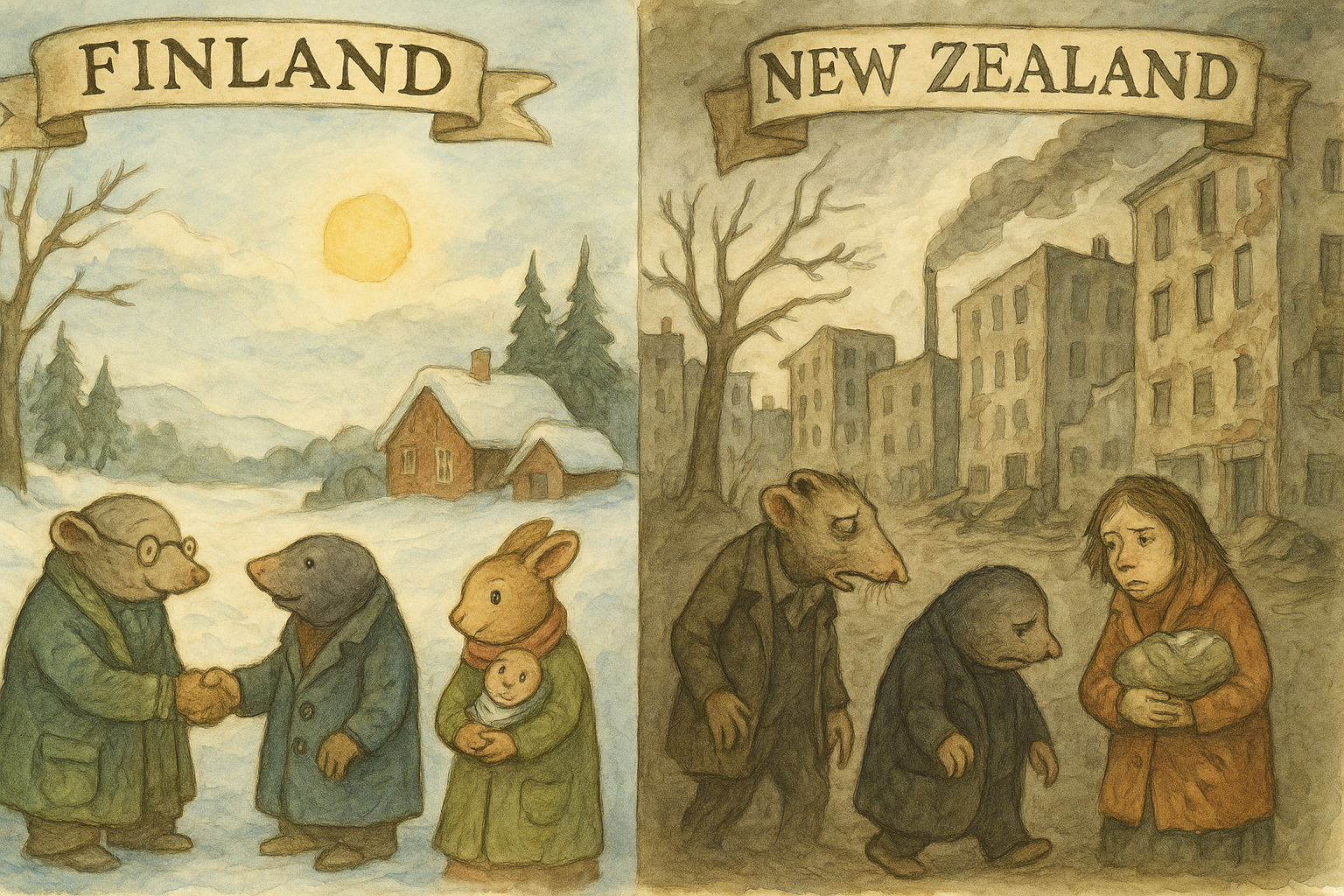
What Finland Can Teach New Zealand About Becoming Happier
Finland consistently ranks as the happiest country in the world - not because of wealth or climate, but because of trust, education and balance. New Zealand faces rising inequality, housing insecurity and mental health struggles, but Finland’s story shows we can make different choices. Could Aotearoa build its own model of happiness - one that blends equity, te ao Māori, resilience and cultural richness?
The End of the Red-Blue Monopoly
Labour and National’s decades-long dominance is crumbling. With both parties polling at record lows, New Zealand’s smaller parties are shaping the future under MMP. But is this new era a democratic breakthrough - or a recipe for chaos?
A Fraternal Rupture
When a family member warned me, “Watch the UK, because that’s where New Zealand is heading,” I took it seriously. Britain’s political churn, culture wars, and economic stagnation offer a stark warning. Drawing on Douglas Murray’s The Strange Death of Europe, this article explores what parallels New Zealand should heed and how we can avoid repeating Britain’s mistakes by investing in identity, inclusion, and long-term strategy.

Luxon’s Rethink – A Radical Pipeline of Absolutely Nothing New
Prime Minister Christopher Luxon has announced a “total rethink” of major events, pitching it as an economic pipeline to boost growth. But beneath the surface, the strategy looks less like vision and more like activity for activity’s sake. In this editorial, we explore the risks of performative leadership, the unflattering parallels with Chris Hipkins, and why Aotearoa deserves more than recycled announcements.

The Cost of Looking Away
Floods in Tairāwhiti, silt-choked homes in Hawke’s Bay, forestry slash devastating Tolaga Bay - these aren’t isolated disasters. They are symptoms of policy failure. This article explores how successive governments have neglected environmental protections, examines the role of ideology and deregulation and asks the urgent question - who is this government really working for?