
The Third Commandment
You shall not take the name of the Lord your God in vain.
Jesus took the InterCity bus from Auckland to Hamilton because the driver had a kind face and the ticket was twelve dollars. He sat near the back beside a woman in a Health New Zealand lanyard who was crying quietly into her sleeve. Her contract had just been “disestablished” in the latest round of public-service cuts. She was forty-seven, sole breadwinner, mortgage, two teenagers, no savings. She kept saying “Kia kaha” to herself like a broken rosary.
The bus rolled south through the Waikato, past dairy farms that had once been Māori land and were now factories for milk powder exported to people who would never see a cow. At the Frankton Countdown a queue of people waited for the food bank that now opened only on Tuesdays and Fridays because the grant had been cut. Jesus joined the line. No one asked who he was; hunger is a great leveller.
A volunteer handed him a parcel two-minute noodles, a tin of spaghetti, half a loaf of day-old bread, a couple of bruised apples. “Sorry it’s not more,” she whispered. “We used to give fresh veges, but the funding…” She shrugged the shrug of a country that has learned to apologise for its own cruelty.
Jesus carried the parcel to a park bench and shared it with a man who had lost three fingers to frostbite the previous winter when the Winter Energy Payment was axed for “targeting reasons.” The man ate slowly, carefully, as though the food might be snatched away at any moment. He told Jesus about the church he used to go to, how the pastor now preached prosperity and how he had stopped attending because he could no longer afford the tithe.
That afternoon Jesus walked past a billboard paid for by a lobby group calling itself Family First. It showed a smiling Prime Minister holding a Bible, the caption underneath reading A RETURN TO CHRISTIAN VALUES. The same week the Government had quietly removed the requirement for landlords to provide heating in rental properties. The billboard was right outside a primary school where children were learning to read with books that had been bought second-hand because the funding no longer stretched.
Jesus looked at the billboard a long time. In the evening he went to a church hall in Fairfield where a prayer meeting was being live-streamed for the party faithful. The Prime Minister was guest speaker. He stood beneath a cross made of native timber and spoke warmly about “the dignity of work,” “personal responsibility,” and “the parable of the talents.”
The audience nodded along, many of them landlords, share-portfolio missionaries, retired farmers who had done rather well out of the bright-line test being shortened again. They clapped when he said the country needed to get back to “biblical principles.”
When the speeches finished and the sausage rolls came out, Jesus waited by the tea urn. Eventually the Prime Minister noticed him and came over, hand already out, smile already on.
“Great to have you here, brother,” the Prime Minister said. “We’re doing the Lord’s work, getting people off welfare and into jobs. Tough love, but it’s love.” Jesus looked at him with the expression a parent wears when a child has just lied about breaking the vase.
“You use my name often,” he said. “In your press releases. In your caucus prayers. On your campaign hoardings. You say ‘Christian compassion’ while you cut the Training Incentive Allowance that let solo mothers study their way out of poverty. You say ‘God’s love’ while you make disabled people beg for equipment that used to be funded without question. You say ‘Judeo-Christian values’ while children go to school hungry because the free-lunch programme is ‘not fully rolled out’ in year six of your government.”
The Prime Minister’s smile faltered. “Look, we can’t help everyone. Choices have to be made. Fiscal responsibility is also a—” Jesus raised one hand, gentle but final.
“When you speak my words but do the opposite, you take my name in vain. It is not the teenager who swears in the playground who breaks this commandment. It is the ruler who cloaks cruelty in piety. It is the lawmaker who quotes Scripture while widowing the widow all over again.”
He reached into the pocket of his borrowed jacket and drew out the empty food-bank parcel. He placed it on the white tablecloth between the savouries and the tomato sauce bottle. “This,” he said, “is what my name sounds like when it is used to justify hunger.” The Prime Minister stared at the crumpled plastic as though it were a dead bird.
Around them the prayer meeting continued someone was leading a worship song about the goodness of God in the land of the living. The chords were major, the smiles were wide, the sausage rolls were going cold. Jesus leaned close, voice low enough that only the Prime Minister could hear. “If you must speak my name, then feed my sheep. Clothe them. House them. Heal them. Or be silent and let the name rest.”
He walked out past the rows of sensible shoes and sensible haircuts, past the framed photo of the Prime Minister shaking hands with Franklin Graham, past the collection plate that tonight would go toward fighting “gender ideology” in schools rather than toward the power bill of the woman on the bus who had lost her job that morning.
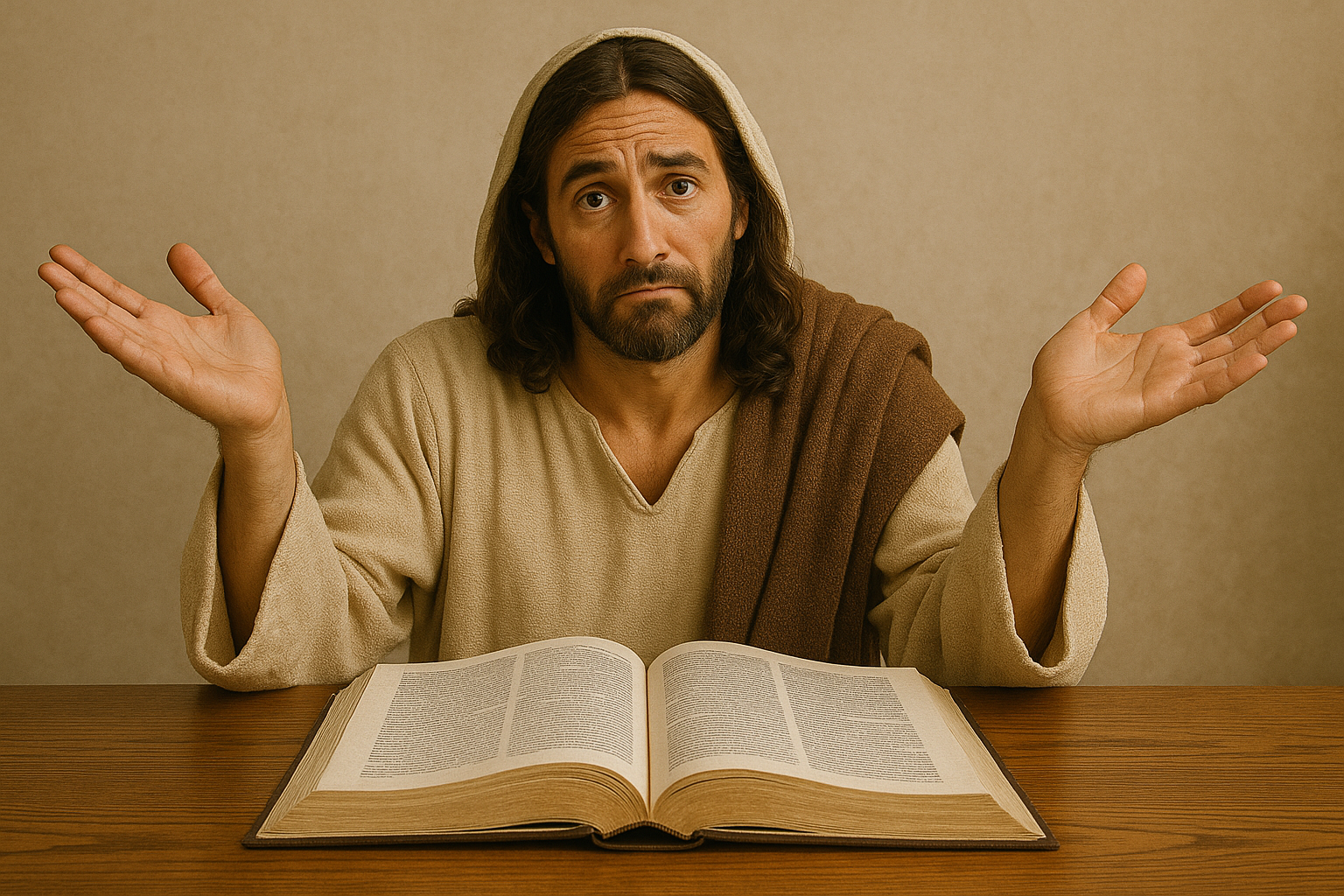
Outside, the Waikato night was mild and fragrant with cut grass. Somewhere a child was learning that “Christian” is a word adults use when they want to do something mean and still feel holy. Jesus stood under the streetlight for a long time, hands open, palms up, as though waiting for something to be placed there that never quite was.
Then he moved on, south toward the next town, the next queue, the next careful smile hiding a careful cruelty.
Behind him, in the church hall, the song reached its triumphant bridge and everyone raised their hands to heaven. No one noticed that the empty food parcel had begun, very quietly, to bleed.
Have any thoughts or insights to share? I’d love to hear them.