
The Fourth Commandment
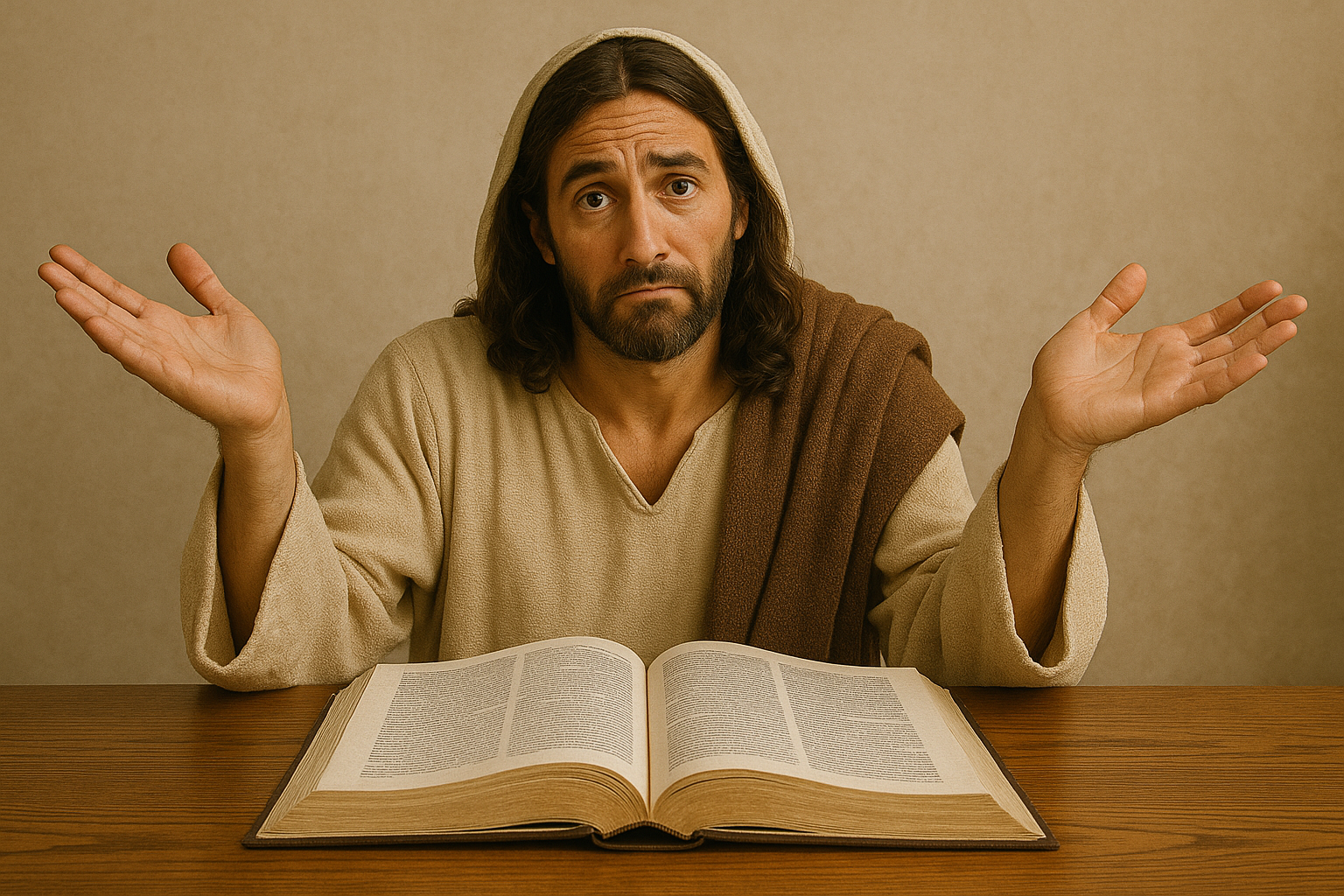
Remember the Sabbath day, to keep it holy.
Jesus took the ferry across to Waiheke on a Friday afternoon because someone told him the island was where Aucklanders went to rest. The boat was full of people in linen and sunglasses, talking about “getting away from it all,” comparing vineyard bookings and the price of helicopter transfers. Jesus stood on the back deck with the wind in his hair, watching the city shrink to a pretty postcard while the crew cleaned cabins that would be rented for more in one night than many of them earned in a week.
When he stepped off at Matiatia he did not head for the vineyards or the $3-million baches. He walked inland, past the real-estate signs promising “lifestyle blocks” for the price of a small hospital, until he found the workers who keep the island running - the Fijian women cleaning Airbnbs at dawn, the Filipino lads mowing lawns before the sun burned the dew, the Kiwi nurse who commuted two hours each way because she could no longer afford to live where she worked.
It was Saturday morning when he reached Onetangi. A café was doing a roaring trade in $24 eggs benedict and flat whites served with a side of property gossip. At the table nearest the window a cabinet minister was explaining to friends why public holidays were “a drag on productivity” and how the country needed “flexibility in the labour market.” He wore a pale-blue polo shirt and the exact colour of privilege.
Jesus kept walking. He found the Sabbath in a small flat above the Four Square in Palm Beach. A Cook Island mother of four was folding laundry at 2 a.m. because she had worked a double shift morning cleaning holiday homes that stood empty most of the year, evening waiting tables at a wedding where the guests tipped in Bitcoin and complained about “staff shortages.” Her husband was still out delivering Uber Eats on a bike with no lights because the minimum wage hadn’t kept up with rent and the kids needed shoes.
The youngest child, six years old, was doing homework by torchlight because the prepay meter had run out again. The assignment was about “What I did in the weekend.” He had written I helped Mum fold sheets. He had drawn a picture of a bed with twenty tiny squares. Jesus sat on the floor and helped fold too. The towels smelled of other people’s holidays, of salt and sunscreen and money.
Later that day, Sunday, he went to the little stone church in Oneroa where the congregation was mostly grey-haired retirees from the mainland. The minister preached a careful sermon about “balancing work and rest in a busy world” and how God understood that modern life was complicated. After the service the same minister shook hands with a property developer who was about to bulldoze the last affordable rentals on the island for “executive residences.” The developer promised a “generous donation” toward the new community centre that would never quite get built.
Jesus waited until the developer had driven away in a Range Rover with the number plate THX-JESUS.
Then he walked down to the beach. The tide was out, the sand wide and empty except for a lone woman in a Countdown uniform picking up litter because her weekend shift started at 4 p.m. and finished at midnight and tomorrow would be the same and the next day, because penal rates had been “reformed” years earlier in the name of “flexibility” and no one had ever brought them back.
Jesus picked up a piece of driftwood and wrote in the wet sand - SIX DAYS YOU SHALL LABOUR AND DO ALL YOUR WORK, BUT THE SEVENTH DAY IS A SABBATH TO THE LORD YOUR GOD.
The woman read it and laughed, not bitterly, just tired. “That’s cute,” she said. “Tell my boss.” She told him her story between pieces of rubbish how she used to have Sundays off to take her daughter to the park, how now she worked every weekend because the rent on their two-bedroom unit had gone up again, how her daughter barely remembered what her mother looked like in daylight.
Jesus listened the way only he can, without looking away. At dusk he caught the last ferry back to the city. The passengers were quieter now, scrolling Trade Me for sections they would never afford, calculating how many more years until the mortgage was paid off, how many birthdays they would miss because penalty rates were gone and the rent was due.
On Monday morning he was in the Beehive, ninth floor, in the cabinet room where the legislation removing yet another public holiday had been nodded through six months earlier. The Prime Minister was chairing the meeting, fresh from his own weekend at a lodge in Queenstown with security and no roster.
Jesus stood at the end of the table. No one asked him to sit. “You were told to remember the Sabbath,” he said, “and you have remembered it only to abolish it.” He looked around the table at the ministers who had never in their lives needed to choose between groceries and electricity.
“The Sabbath was made for man,” he said, “not man for the economy. I gave it so the slave could rest, so the stranger could rest, so even the ox could rest. You have turned it into another working day for the poor while the rich fly helicopters to their bach.”
He placed a small, smooth stone on the polished rimu table. It was the kind of stone a child might use to weigh down a homework page written by torchlight. “Six days you may grind them,” Jesus said quietly, “but the seventh belongs to me and to them.”
The Prime Minister cleared his throat. “We’re a modern economy. People want choice. Some prefer to work Sundays and take Tuesday off instead.” Jesus looked at him the way a father looks at a child who has just explained that two plus two equals five if you really believe it. “Tell me,” he said, “when did I say, ‘Come unto me all ye who are weary and heavy-laden and I will give you a zero-hour contract with no penal rates’?”
Silence.
Outside the window, gulls wheeled over the harbour like white commas in a sentence no one wanted to finish. Jesus picked up the stone again. “Remember the Sabbath day,” he repeated, almost tenderly, “and keep it holy. Not for my sake. For theirs.”
He left the room. The stone stayed where it was, small and ordinary and impossible to move, no matter how many agendas were stacked on top of it.
Down in the basement car park, the Cook Island woman was starting her night shift at the hospital, folding someone else’s sheets again. Somewhere a child was learning that rest is a luxury you earn only after you have paid everyone else first.
The stone on the cabinet table waited, patient as geology, for someone to remember what it was for.
Have any thoughts or insights to share? I’d love to hear them.