
When Decency Changes Everything
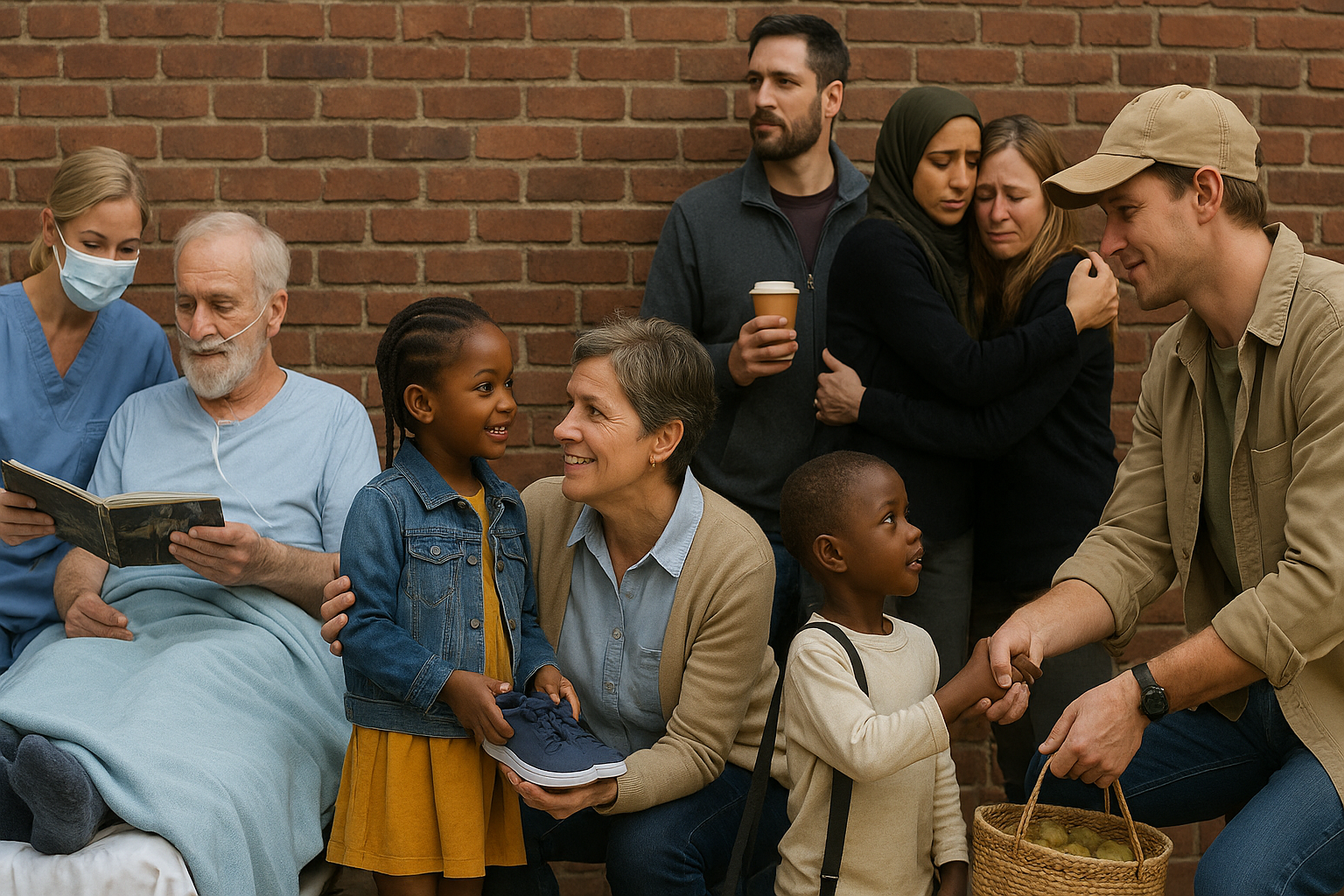
Why small, thoughtful acts from everyday people matter more than we think – and how their ripples reshape lives.
In a world that often feels noisy with outrage and bad headlines, the stories that stay with us are usually much quieter. They are the moments when one person simply decides to be decent, even when nobody is filming, nobody is clapping and nothing “big” seems to be at stake.
No school for this little girl
Take the little girl who stopped turning up to school because her only pair of shoes had worn through. Her parents couldn’t afford new ones, so they kept her home, ashamed and stuck. Her teacher could have marked her absent and moved on. Instead, she picked up the phone, listened to a hard truth, and said, “Have her ready tomorrow. I’ll come get her.” The next morning they detoured via a shoe shop. One pair of shoes and a lift to school: on paper, not much. In reality, a child was told, “You belong here. You are worth the trouble.” Years later, that same teacher gave the girl her whole library of books, quietly feeding a love of reading that still shapes her life. A few dollars and a car ride turned into a lifetime of learning.
Nurturing connections
In a COVID ward across the world, kindness looked different but carried the same weight. A man lay in hospital for forty days while his wife called again and again, unable to visit. Nurses could have stuck to the minimum: charts, meds, the next patient. Instead, one of them sat with him and went through the photos his family sent, listening to the stories behind each face. Another washed and prepared him so he could “attend” his daughter’s wedding via Zoom, treating a man on a ventilator as a dad first, a patient second. Palliative care doctors became the family’s eyes and ears, helping with impossible decisions. When the end came, a nurse and a junior doctor stopped everything else to sit with his wife while she said goodbye.
The ripples didn’t stop at the hospital door. At his funeral, only ten people were allowed inside. So his co-workers – fellow delivery drivers – parked their trucks outside the church in the Arizona heat and listened to the service over speakers, forming a guard of honour on wheels. The next day, which happened to be Father’s Day, they turned up again, this time in work clothes, to mow lawns and do the heavy yard jobs their mate would once have done himself. None of them could bring him back. But they could say, in the most practical way possible, “You are not alone. He mattered. You matter too.”
I’ll pay for that
Kindness also shows up in far more ordinary settings, like a drive-through coffee queue. One man decided, on a whim, to pay for the order of the car behind him. Nothing huge: a coffee and a couple of doughnuts, passed on with a simple message, “Have a nice day – pay it forward.” It made him feel good, so he kept doing it. Staff began to recognise his ute and nicknamed him “the Tacoma guy”. One day he pulled up to find someone else had already paid for his meal. A woman he’d once shouted coffee for had spotted his vehicle and quietly returned the favour. On another day, the car behind him turned out to be collecting breakfast for a whole sports team. The bill was far bigger than usual. For a second, he hesitated – then paid it anyway. His reasoning was blunt and generous: if you’re next in the batting order, you still step up and take your swing.
The ripples
On the surface, these are tiny transactions, soon forgotten by most of the people in the queue. But the story doesn’t end at the till. Staff see it. Kids in the back seat see it. Strangers drive away reminded that yes, people can still be kind for no reason at all. That changes how they show up in their own day.
The power of community
Sometimes the stakes are much higher. A woman escaping an abusive marriage found herself homeless, broke and traumatised, trying to protect her child with no family support. There was no single hero who swept in to rescue her. Instead, a whole pattern of small but serious kindness emerged. Someone offered her casual work in their garden. Someone else told her about rentals that included a work-for-rent option. A couple gave her an old van in exchange for jobs around their property so she didn’t have to hitchhike her child to school. Others stood beside her in court so she wasn’t facing the legal system alone.
None of those people rewrote policy or changed the world. They simply used the resources, time and courage they had to help one woman get through. Years later, she is a homeowner, running her own small business and offering food, money, lifts and a spare bed to others. The ripples are now hers to pass on.
Just being there
Sometimes the gentlest acts are almost wordless. When a woman’s partner died, she lay down next to his body and wept. Her sister didn’t try to cheer her up or search for the perfect phrase. She simply lay down beside her and cried too – one grief braided with another. You cannot measure that in dollars, but anyone who has been truly bereaved understands its value. It says, “I can’t take away your pain, but I won’t leave you alone in it.”
Out travelling one day
In Ethiopia, a traveller once bought a small metal cross from a girl in a hill town. It was a simple souvenir, the kind you could easily misplace in a drawer. He kept the cross and the email address she scribbled on a piece of paper, and years later, when work took him back to the country, he decided to write. The girl, now a teenager in the capital city, was walking the streets looking for a scholarship. Her father had died, her mother had become a nun, and she was determined to get an education anyway. He chose to help, paying for her to study tourism and guiding.
Years on, they travelled together through another part of the country. On the outskirts of an ancient city, they passed a boy sitting in the dust with a small basket of hard, unappealing berries. She bought some even though they were not particularly tasty. She understood exactly how it felt to be that child, trying to add a few coins to the family income. Her earlier struggle had become fuel for empathy. One decision to support her education had turned into many more decisions – hers and his – to notice people on the margins and respond.
What links these stories is not miracle-level sacrifice or flawless virtue. It is a collection of ordinary humans making choices: to pick up the phone, to stay in the room, to reach for their wallet, to lie silently beside someone in pain, to remember a face from years ago and send an email. None of them knew, in the moment, how far those choices would echo.
The power of kindness
And that is the quiet power of kindness. It doesn’t always fix the big systems that are grinding people down, but it does something just as important: it interrupts the story that says nobody cares and nothing will change. A child who thought she was “too poor for school” becomes a lifelong reader. A grieving family surrounded by brown delivery trucks understands, deep in their bones, that their loved one’s life mattered to many. A woman once trapped in violence becomes the neighbour everyone can turn to. A young boy in a dusty market learns that strangers can see him, not just walk past.
If we all chose, more often, to act with grace, dignity and compassion, the world would not suddenly become perfect. There would still be pandemics and broken relationships, tight money and long nights. But the texture of everyday life would be different. Hospital corridors would hold a little more humanity. Coffee queues would carry a little more goodwill. Courtrooms, classrooms, workplaces and streets would be places where people could reasonably expect not just basic fairness, but a measure of kindness.
Most of us will never lead a country or design a welfare system. But every day we step into dozens of tiny moments where our behaviour can tilt someone’s life a fraction toward hope instead of despair. We can choose to be the teacher who picks up the phone, the colleague who turns up with a mower, the stranger who quietly pays the bill, the friend who simply lies down and stays.
The ripples from those choices travel much further than we ever see. And if enough of us keep choosing that kind of decency, then slowly, stubbornly, the world begins to look a little more like the place we keep saying we want to live in.
If you’d like to share your thoughts or discuss further, feel free to reach out. I’d love to hear from you. +64 275 665 682 john.luxton@regenerationhq.co.nz www.regenerationhq.co.nz/contact