Thought Leadership - What we lose
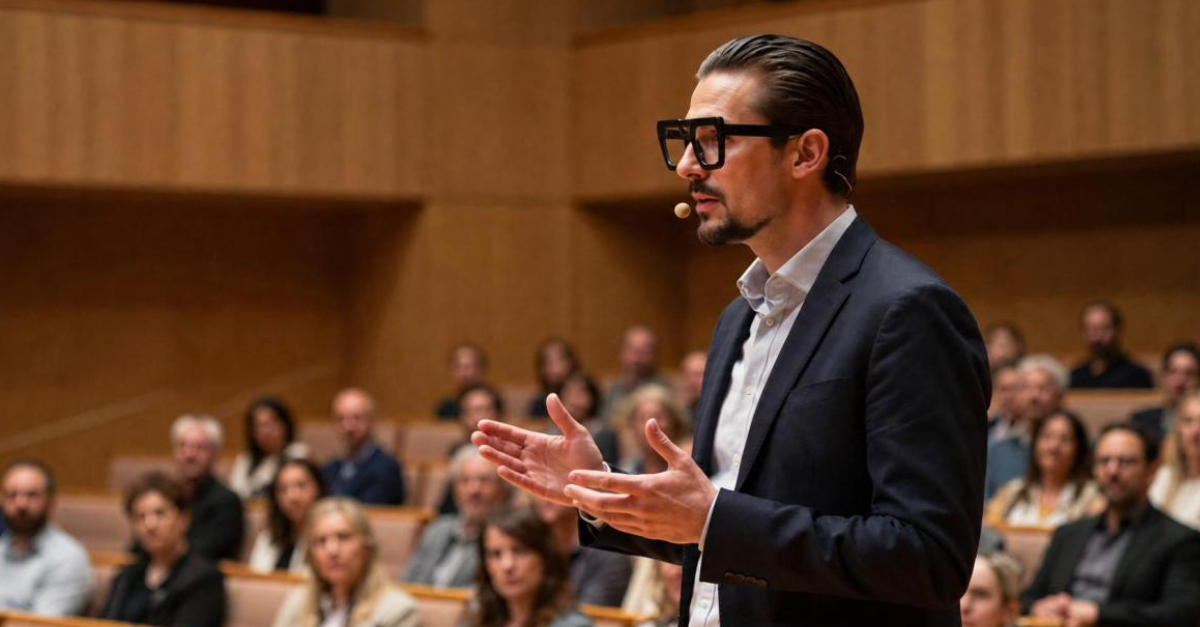
a thought leader doing thought leading
Take away real words and we lose a lot
It is 9pm on a Tuesday. You are at the kitchen table. The dishes are done. The dog is on the floor. The laptop is open. The LinkedIn compose field is open. You have been staring at it for forty-five minutes.
You are a Kiwi business owner. You have run a business for nineteen years. You are good at what you do. Customers who have worked with you say so to other customers, which is the only marketing that has ever reliably worked, anywhere, in the history of anything. You employ fourteen people. You have not, in those nineteen years, ever needed a personal brand.
You have been told you need a personal brand.
You have been told you need to post.
The marketing consultant who told you this used the phrase building thought leadership in the sector. The consultant is twenty-six. The consultant has been in your sector for three years. The consultant has, however, posted twice a day for three years, which means the consultant has more LinkedIn followers than you have customers. By the platform’s own arithmetic, the consultant is therefore more credible than you.
You close the LinkedIn compose field. You open it again. The cursor blinks. The dog has not moved. The dog is, on the available evidence, the only mammal in the house with their priorities in order.
What we are losing
This scene is happening in living rooms across the country. The number of Kiwi business owners who feel obliged to perform on a Microsoft-owned platform in order to be taken seriously is rising. The number of Kiwi business owners who suspect they are being slightly suckered by the obligation is also rising. The same group, mostly, holds both feelings at once.
What we are talking about, when we talk about thought leadership in 2026, is the slow salting of a national well.
The well is the public conversation about business in this country. The salt is the imported performance style that turns plain talk into pitch deck and then into noise. Each post is a teaspoon. The water keeps coming up. Eventually nobody can taste the difference between insight and posture. By then, the people who could have built the conversation have walked away from the tap.
The platform, observed
Dan Ahwa, writing in NZ Herald Viva in August 2024, called LinkedIn the digital version of a soulless corporation. At its best, he wrote, the platform is earnest. At its worst, wholly unfunny. The descriptions are diagnostic rather than dismissive. He is not saying nobody on LinkedIn is sincere. He is saying the platform punishes the things that make sincerity readable. Specificity. Brevity. Self-deprecation. The kind of dryness that, in person, lets a Kiwi business owner say what they actually mean.
RNZ Lifestyle around the same time described the platform as a closed loop of bragging, congratulating, bragging and congratulating, where users hope to be either headhunted or crowned a LinkedIn thought leader. The phrase to circle is closed loop. The platform is its own audience. The participants congratulate each other into a state of permanent low-grade self-promotion. The applause never stops because the applauders are also the applaudees. The applause has, by now, become the product.
There are people doing this well. Lisa Young at Exceed HR has fifty thousand followers and uses the platform to amplify people who actually have something to say. Julie Clothier at Good Scoop, the non-profit communications agency, describes LinkedIn as a cornerstone of her practice, which sits inside an actual practice. They are not the targets. The targets are the people performing in their direction, hoping some of the substance rubs off through proximity.
The voice translation problem
Here is the central tension. The Kiwi business owner at the kitchen table, dishes done, dog on the floor, does not talk the way thought leadership posts talk. The Kiwi business owner says, when asked what they do, something specific and modest. We make stuff. We fix things. We help people sort out their accounts. We brew beer. We mill timber. We sell good wine. The Kiwi business owner does not, in the wild, use the phrase unlocking value or driving outcomes or leveraging insights at scale. The Kiwi business owner is not, on the evidence of nineteen years of customer loyalty, less effective for the absence of those phrases.
On LinkedIn, the same person sounds different. The same person sounds like everyone else. The same person posts a carousel about resilience that begins I almost did not share this, but. The same person no longer sounds like the person who actually built the business. The platform has translated them out of their own voice and into the house style. The translation is the cost of admission. The translation is also, in plain Kiwi terms, the bullshit.
The quiet experts losing share of voice
There is a second cost. It is heavier.
The genuine NZ subject matter experts, the people whose careers were built in the years before LinkedIn existed, who know their fields the way a sheep farmer knows their paddock, who have been quietly running their part of the economy for thirty years, are losing share of voice. They are losing it to people with a tenth of their experience and twice the post frequency.
The platform has decided that audibility is achievement. Audibility, it turns out, is a different skill set than competence. The two skill sets correlate, but not strongly. They never correlate reliably. There is a generation of Kiwi expertise that was built when reputation was a slow accumulation of competent work, attested by clients, in real industries with real margins. That generation does not know how to compete on a platform optimised for the opposite of what they did. Some of them are retiring early. Some are simply quieter than they should be. The country is, in a quiet way, losing the benefit of their long view.
If you have ever wondered why so much of the LinkedIn discourse about, say, manufacturing in New Zealand comes from people who have never actually run a manufacturing business in New Zealand, this is the answer. The people who have run those businesses are doing other things. The people writing about them have time to write about them. The time is the disqualification.
The tall poppy paradox, held honestly
This is where the tall poppy syndrome needs to be held honestly with both hands.
On one side, the Kiwi impulse against self-promotion has always had its costs. People who deserved to be heard have been kept quiet. People who were brilliant at their work were not always brilliant at saying so. The country sometimes lost the benefit. Some of those people gave up and went to Australia. Some went to London. Some went to Silicon Valley. The instinct to clip the tall poppy can be punitive. It can be ungenerous. It can be small. It is not a virtue without a cost.
On the other side, the same instinct turns out to be a partial defence against a global discourse drift the rest of the world fell into faster. The Kiwi reflex against people who talk like they are pitching themselves is not just rudeness. It is, on a good day, a quality filter. The reflex says, in effect, prove it with the work before you tell us about the work. The reflex is the same instinct that makes a tradesman trust his mate’s recommendation over a Google review. It is hard-coded into the country’s professional culture.
It is also under sustained attack by an industry that requires people to ignore it in order to be visible.
The cultural antibody is partial. The cultural antibody is, increasingly, not located in the meeting room. The cultural antibody is at the pub, on the building site, in the carpark after the conference, where people say what they actually think after they have stopped performing. The antibody works. It is just no longer reliably located where the work happens.
Earnest, two ways
Earnest is a word that does a lot of work in New Zealand. Earnest can mean honest. Earnest can also mean credulous.
The thought leadership performance style preys on the credulous side of earnestness. It dresses corporate slop up as personal vulnerability and bets that Kiwis, who have been raised to take people at face value, will assume there is a face behind the value. The bet is paying off. The face, in most cases, is composite. The face has been assembled by an agency in New York, ghosted by an assistant in Manila and ranked by an algorithm in San Francisco.
Earnest, in the older Kiwi sense, was the right thing to be. Earnest in the LinkedIn sense is a trap.
The Ministry compels you
The Ministry of Performative Insight, in what observers are calling its boldest move yet, has issued the Mandatory Visibility Compliance™ framework. The framework requires all New Zealand business owners to maintain, at minimum, a publicly maintained representation of the business owner’s professional persona in synergistic alignment with category leadership norms.
Failure to comply will be met with reduced visibility. Reduced visibility is, the Ministry concedes, currently the only sanction available. The Ministry is working with sector partners to escalate consequences.
The guidance was written by an agency in Wellington. It was drafted by a generative AI tool. It was operated by a virtual assistant in Manila. The Minister did not, at the time of release, fully understand what de-contenting means. The guidance is, however, trending.
What the country still has
We can do better than this. We have done better than this.
The conversation about business in Aotearoa has, at its best moments, been one of the most useful in the world. It is the conversation you can still hear in a Christchurch carpenter’s workshop. In a Wairarapa winery. In a Hamilton accountancy practice on a Friday afternoon. The conversation is concrete. The conversation is dry. The conversation is honest in a way that does not require the word authentic to be deployed twice in the opening paragraph. The conversation does not, ever, begin with the words I almost did not share this, but.
The conversation is still here. It is happening in person, in kitchens and yards and workshops, between people who already know each other or who are about to. It is the conversation our actual economy runs on. It is also the conversation our public discourse used to look like, before the platform took the contract.
Back at the kitchen table
The Kiwi business owner closes the laptop. They have not posted. They will not post tonight.
The customers who have worked with them for nineteen years are not on LinkedIn. The customers are at home, with their own dogs, on their own kitchen tables, also wondering whether they should post.
There is a country in here, somewhere underneath the noise. The country still works. The country still makes things. The country still helps people sort out their accounts. The country still brews beer. The country still tells you, when asked, what it actually does, in fewer words than the platform allows. The country has not been salted entirely. There are still pockets where the water is clean.
Mandatory Visibility Compliance™ is, in plain English, a category error. The compliance is to a visibility regime imposed by a Microsoft-owned platform whose business model depends on monetising attention. The visibility is not the work. The willingness to perform on the platform is not the work either. The country has, traditionally, known the difference.
It does not have to forget now.
The page is full. The well is empty.